What’s in a Name? Or How Do You Name a Restaurant?
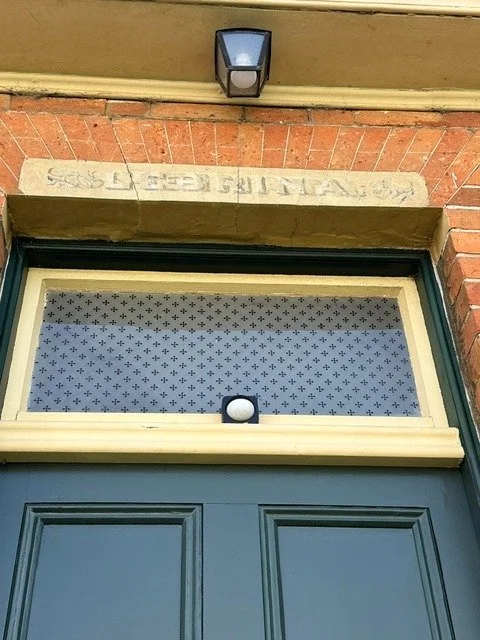
We encountered the same problem that had confronted Thomas White: a naming problem.
White had designed and laboured over his house, using all his considerable building skills, and at some point had to decide what to call it. We faced a similar dilemma with our new restaurant. We wanted its name to reflect the beauty of the house, its ambience, and the exceptional cuisine we hoped to offer.
In the end, the answer was simple. We named the restaurant after the house: Lebrina.
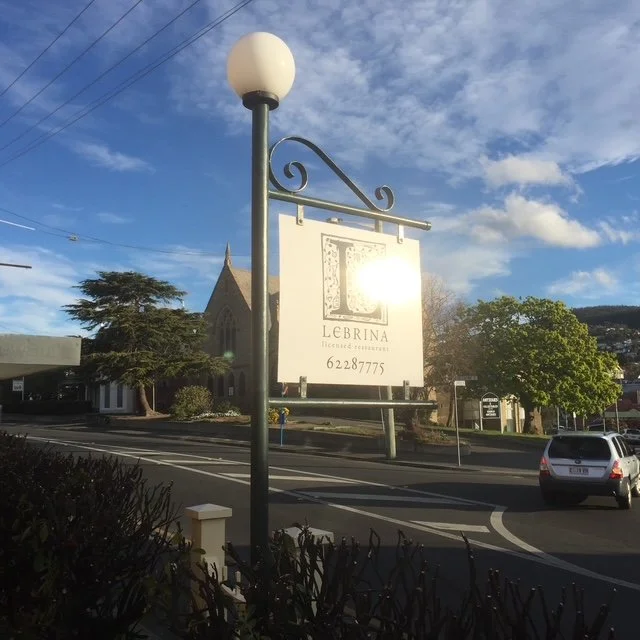
Initially, the full name was Lebrina, the New Town Bistro. The word bistro reflected our desire for the restaurant to appeal to local people and become a neighbourhood dining room, or rooms in our case. Many of our customers lived within walking distance. We were, after all, situated in the middle of a residential area, albeit one with commercial zoning. Walking to dinner saved the cost of a taxi and, perhaps more importantly, allowed people to enjoy a bottle or two of wine without concern for driving home.
A bistro—or bistrot, in its original Parisian form—is a small restaurant serving simple, moderately priced meals in an informal setting. That was broadly the atmosphere we wanted to convey, although what we created gradually evolved into something more refined. The setting of the restaurant influenced the cuisine, a 3 course offering, with choices and the decor made it an ‘occasion’ and ‘destination’ restaurant.
The word bistro remained on the sign at our front gate and later appeared on our website, although the website was not created until 2011—seventeen years after we opened. By then, we described Lebrina rather differently:
> “Lebrina, an à la carte restaurant, offers a dining experience reminiscent of being in a private home.”>
Thomas White’s gracious 1844 New Town townhouse, simple but elegant, quickly transformed into a restaurant, when we did that in 1994. White’s substantial building skills and the quality of materials he used, the care of subsequent Lebrina owners in the later 19th and throughout the twentieth centuries, enabled the four beautifully proportioned downstairs rooms to easily convert into sophisticated and comfortable dining spaces. The exterior triple Flemish-bond brickwork had never been painted, interior linings of solid plaster and New South Wales flame cedar and celery-top pine woodwork joinery breathed ambience and longevity. The Georgian-Victorian simplicity of the house provided the setting for the food: cuisine inspired by Northern France and Italy, using the best of Tasmanian produce.
Over our 26 years of operation, the description of the restaurant gradually evolved—from “bistro”, to “à la carte restaurant”, and eventually to the more prosaic “licensed restaurant.”
In restaurant terminology, à la carte means that dishes are ordered individually, priced separately, and cooked to order—such as a steak prepared rare or medium-rare—rather than being part of a set menu offered at a single price. It was, in fact, a far more accurate description of what we did.
But the name Lebrina itself carried another significance.
Lebrina, the house, and Lebrina, the restaurant, shared the same name because Lebrina is a Palawa Kani word meaning “house” or “hut.” The name felt particularly appropriate. The restaurant was, after all, a house first and a restaurant second, and we wanted it to retain the quiet intimacy of a private home.
Perhaps Thomas White had thought of his house in similar terms when he named it Lebrina. I have never been able to establish exactly why he chose the name, although the meaning in Palawa Kani makes it compelling. I have since discovered at least two other houses in Tasmania bearing the same name—one in Hobart and another in Launceston. The Hobart example is modest and unobtrusive; the Launceston house is more substantial and imposing.
There is even a very small settlement in north-east Tasmania called Lebrina, little more than a hamlet.
In earlier times, naming houses was far more common than it is today. Owners of substantial homes, in particular, often gave their properties names. In New Town, many of the grand historic houses still carry the names bestowed by their original builders or owners. These names do more than distinguish one house from another; they often reveal something of the aspirations, circumstances, or imagination of the people who created them.
This leads to the broader story I want to explore.
In a subsequent piece, I would like to look at some of my favourite named (and un-named) houses in New Town—their locations, their architecture, and, where possible, the stories behind their names and inhabitants.
For me, this is central to the social history of New Town. These houses are not simply heritage buildings scattered through Hobart’s oldest suburb. Together, their names, locations, architecture, and occupants tell the story of a community and of the people who sought to establish themselves within it.
New Town is one of the earliest settled parts of Hobart and is generally regarded as its oldest suburb, having been established within a week of the original settlement at Sullivan’s Cove. It contains a remarkable concentration of heritage places, buildings, and stories.
But perhaps the most interesting of these stories are not always found in the grandest houses themselves. Sometimes they begin with something as simple—and as revealing—as a name.
Lebrina is not a grand house, but like many other simply elegant and understated New Town houses, its ambience and beauty shine. I’d like now to introduce you to some of my favourites.