Bothwell & New Town - Landscapes Can Exert A Quiet Pull Across The Decades and Places Find You Again
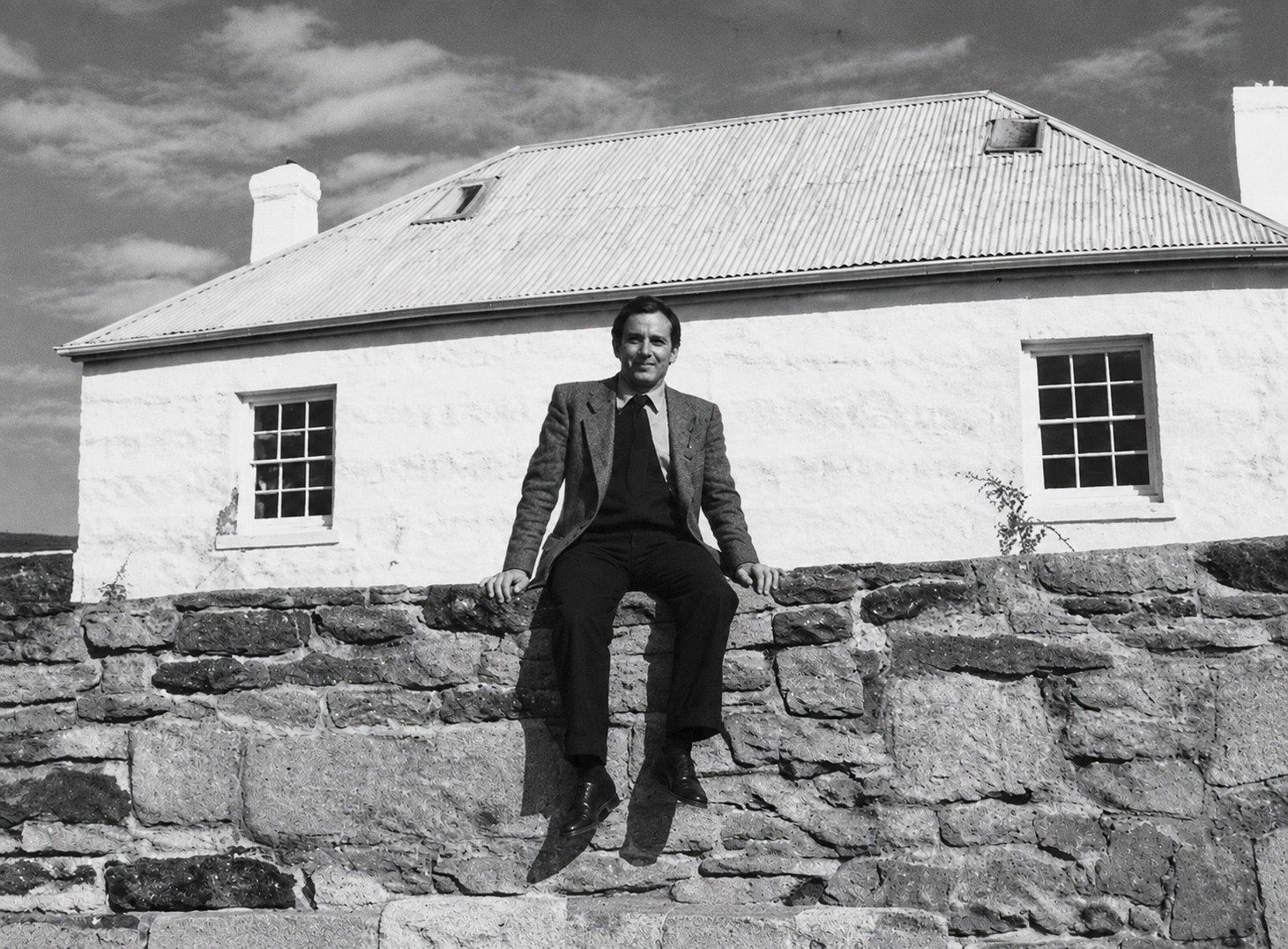
The historic Georgian town of Bothwell, nestled at the foot of Tasmania's Central Plateau, was established in 1821–22. It is a place that has remained memorable to me for several reasons. Life and then literature linked the early and historically significant settlements of Bothwell & New Town for me.
I first visited Bothwell while travelling south from my first teaching appointment at Wynyard. It must have been 1975. By then, our close friendship group had been scattered across Tasmania to our first teaching positions, all of us "prisoners" of the Education Department Studentship system. We were bonded to teach for the number of years that matched the training funded by the Department. None of us really minded. Passing the Diploma of Education after completing an Undergraduate Degree, guaranteed employment, with a starting salary of around $8,000 a year. The only uncertainty was where we would be sent, and some of us found ourselves teaching in towns we had barely heard of, let alone visited.
I was posted to Wynyard. My friend R’s partner, K, was appointed to Bothwell District High School, while R and another of our Diploma of Education friends, M, were fortunate enough to secure positions closer to what we regarded as civilisation—in Launceston and New Norfolk. Despite the distances, we remained a close-knit group and made an effort to visit one another. One such reunion took place in Bothwell, where K was living and teaching in the midst of an historic, quite isolated farming community.
This reunion doubled as a Pre Wedding Party for both R and M, both about to marry their respective sweethearts, partly to ensure they were able to live with their partners, also teachers, rather than residing at opposite ends of the state.
I had heard that K was living in a cottage on a large property on the outskirts of Bothwell. That property turned out to be Nant, and the cottage itself held an extraordinary place in Tasmanian history. It had once been the home of the Young Irelanders John Mitchel and, later, his colleague John Martin. Both men were Irish political prisoners transported to Van Diemen's Land in the early 1850s. Learning that we were staying in a place connected with such dramatic events only heightened the sense of adventure that seemed to accompany those early teaching years.
Like New Town, established even earlier than Bothwell ,in 1804, Bothwell itself has a rich history. Lieutenant Governor William Sorell identified the district as ideal sheep-grazing country in 1820, and Scottish settlers established the township in August 1821. Named after Bothwell in Lanarkshire, Scotland, the town was formally laid out beside the River Clyde in 1824. Many of those early settlers constructed substantial sandstone buildings that survive today, giving Bothwell one of the finest collections of Georgian architecture in Australia.
Several landmarks reflect this remarkable heritage. Ratho Farm is home to Australia's oldest golf course, established in the 1830s. St Luke's Church, 6completed in 1830, contains beautiful carvings by the convict stonemason Daniel Herbert, while the Castle Hotel, first licensed in 1829, continues to welcome visitors nearly two centuries later. Historically, Bothwell's economy revolved around sheep grazing and agriculture, while the town also served as an important service centre for communities on the Central and Plateau. It became a rural municipality in 1862. Today, Bothwell is recognised not only for its remarkably preserved colonial streetscape but also as a popular destination for trout fishing.
Looking back, my first visit to Bothwell combined friendship, the excitement of beginning a teaching career, and an unexpected encounter with Tasmania's colonial and Irish history. It is a place whose historic character and personal associations have ensured that it has remained vivid in my memory ever since.
That memory of a party in Bothwell during the 1970s lingered in my subconscious for years. What I remembered most vividly (even more than the drunken, food-throwing party, typical of all our 70’s parties), was the gorse-covered landscape and Sasha, The Golden Cocker Spaniel), chasing and catching a rabbit just beyond the back door of Nant Cottage as it darted through the dense thickets that almost swallowed the surrounding pasture.
At the time, I did not fully appreciate what I was seeing, even though I had studied Australian and Tasmanian history at the University of Tasmania under the legendary Malcolm McRae. Tasmania had become plagued by three English introductions that would prove to be enduring pests: gorse, rabbits and blackbirds. All had been brought here, deliberately or otherwise, in an effort to make the colony resemble the country many settlers had left behind—whether by choice or by force.
Gorse was introduced by early settlers who wished to recreate the familiar English countryside. It formed dense, thorny hedges that provided an inexpensive way of enclosing sheep and cattle. In Britain, crushed gorse, known as chaff, was also valued as a high-protein winter feed for working horses. In Tasmania, however, freed from the insects and diseases that kept it in check in Europe, gorse flourished. The island's mild, sunny climate allowed it to produce seed twice each year, and before long it had spread far beyond the hedgerows where it had first been planted.
Looking back now, that fleeting image of Sasha disappearing into the gorse in pursuit of a rabbit has become symbolic of the unintended consequences of colonisation. The gorse, the rabbits and even the blackbirds were all reminders of how settlers sought to remake an unfamiliar landscape in the image of home, often with ecological consequences that would last for generations
The second reason Nant Cottage became significant to me came much later, when I was finally able to put a name to it and appreciate its remarkable history. I cannot remember exactly when that happened, but it was sometime after I discovered the writing of Christopher Koch. Around 1982, I saw The Year of Living Dangerously, directed by Peter Weir and based on Koch's novel of the same name. By then, my colleagues and I revelled in good films and television. It was a golden age of Australian filmmaking. I had already seen Weir's Gallipoli in 1981, and the two films sparked a growing interest in Australian literature and cinema.
For me, books and films always went hand in hand. I would watch a film, read the novel on which it was based, then seek out other works by the same author. That is exactly what happened with Christopher Koch. Discovering that he was Tasmanian made his writing even more compelling, and I found myself reading my way through much of his work. In doing so, I eventually encountered references that led me back to Bothwell, Nant Cottage and the extraordinary story of the Young Irelanders who had once lived there. A party in an historic Bothwell Cottage
It was inevitable that, sooner or later, I would read Christopher Koch's Out of Ireland. In fact, I did not come to it until the early 2000s, when another place with deep historical associations became my home—New Town, Hobart's oldest suburb. It was there that I discovered Koch's childhood home in Stoke Street, only a short distance away, from my home, Lebrina, on New Town Rd.
As I immersed myself in his work, I realised that New Town featured prominently in much of his fiction, particularly Out of Ireland. So, too, did Bothwell and Mitchel (Nant) Cottage. I found myself drawn inexorably into Out of Ireland and Bothwell; the threads combining, to lead me there. Koch wove together the landscapes and histories that had become increasingly significant in my own life, and the novel transformed places I thought I knew into places rich with deeper meaning.
Then, in 2004, my partner bought land in the Central Highlands township of Miena. After we built a house there as a weekend retreat, our journeys almost always took us through Bothwell. It began to feel as though we were repeatedly retracing the paths of Christopher Koch and of his partly fictional Young Irelander, Robert Devereux, the protagonist of Out of Ireland. With each journey, Bothwell became less a place we passed through and more a place where literature, history and personal memory converged.